Workflows that wait for a person
By Team Two · Last updated September 23, 2026 · 2 min read
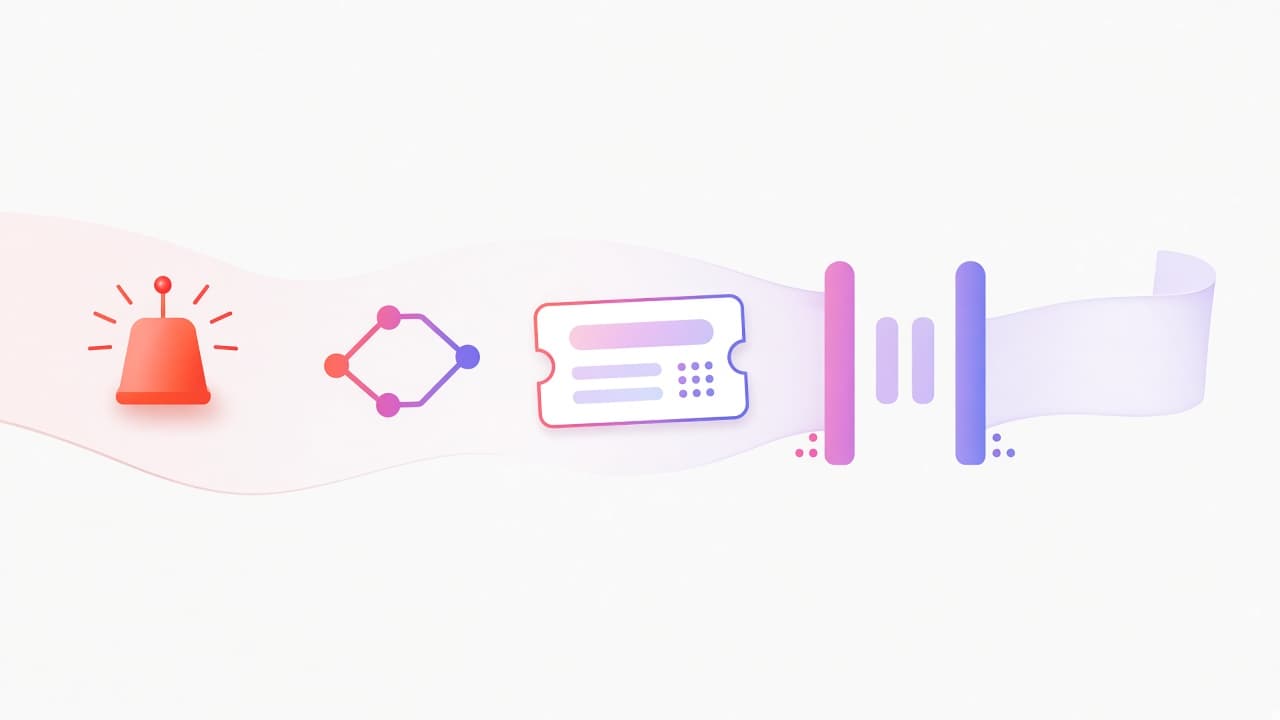
Some work is a conversation. Someone asks in Slack, an agent answers, and that is the whole job. Some work is a sequence: pull the diff, review it, and only then tell the channel if something is wrong. Sequences belong on a workflow, where each step is visible and a person can stop the line.
A graph, not a hidden script
You build a workflow on a canvas. The node types are trigger, agent, tool, condition, channel, transform, loop, human input, delay, switch, HTTP, sub-workflow, and error handler. A run starts from a manual click, a schedule, a webhook, a channel message, or an event.
A condition splits the path. A loop repeats. A sub-workflow calls another graph. An error handler is where a failed step goes, instead of vanishing. You can watch the run step by step.
There is a template library for engineering, sales, support, HR, finance, operations, and management. Templates are starting points. They are not a claim that the template matches your process on the first run. Read the graph, point it at your agents and your channels, and change the steps that are wrong.
The pause is a node
A human-input node stops the run until someone approves, rejects, or answers. Use it before a message leaves the company, before a ticket is closed, or before a deal field is overwritten. The agent can prepare the work. The node is what keeps the send from being the default.
Email follows that rule even outside a canvas. An agent may read a thread and draft a reply. The reply is not sent on its own. Someone approves the draft, or a workflow passes through a human-input node first.
Workflows use the same tools and the same permissions
A tool node can only call a tool the agent is allowed to call. A workflow does not bypass the permission model described in Who is in control. If the agent cannot update Jira in chat, it cannot update Jira from a graph either.
Skills and workflows solve different problems. A skill is a playbook inside a conversation. A workflow is the sequence, including the step where a person has to be in it. See Skills are playbooks.
Frequently asked questions
Can a workflow send a customer email with no one looking?+
No. Customer replies require a person, either by approving the draft or by passing a human-input node.
Do templates run against our data as soon as we open them?+
No. A template is a graph you edit. It does nothing until you run it, and it uses the agents, tools, and channels you connect.